
Quick answer
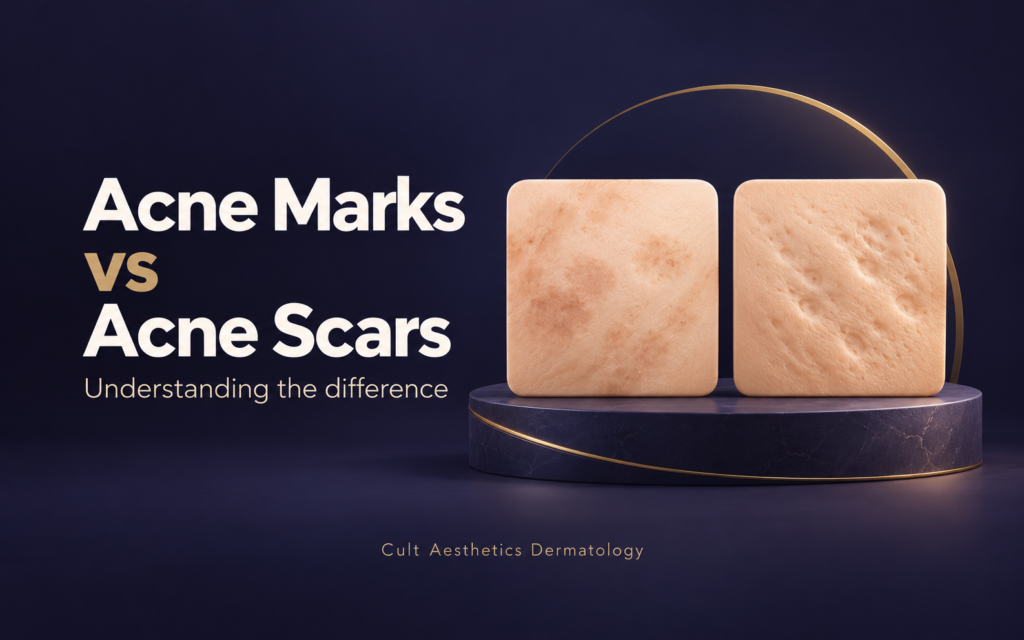
A flat red or brown mark left after a spot is not necessarily an acne scar. A scar changes the skin’s texture: it may look like a dip or a raised area. You can have marks and scars at the same time, which is why an assessment matters before choosing a facial or procedure.
What do you notice in the mirror?
Look at the area in ordinary daylight. Does it appear flat, with only a change in colour? Or can you see a dip or raised patch when the light comes from the side? Do you still have new breakouts? These observations help you describe the concern, but they are not a diagnosis. The American Academy of Dermatology explains that flat post-acne colour changes are often mistaken for scars.
Why does the difference change the plan?
A treatment that addresses surface colour is not automatically a treatment for a change in texture. If acne is still active, the clinician may want to address new breakouts as part of the plan. Ask which part of your concern is a mark, which is a scar, and what can realistically change. Our acne treatment page and acne scar treatment page cover the two related pathways.
Watch the Dermatology clinic’s explanation
Dr Jaspreet discusses acne, scars and skin care in this video from the Cult Aesthetics Dermatology YouTube channel: Pimples Kyun Hote Hain?. The video is general education; your own skin still needs assessment.
Clinical note
Do not choose a procedure based on a social-media picture that looks similar. Skin tone, scar type, active acne and current medicines can affect a safe plan.
FAQ
Can a flat mark fade? Some do over time, but the timing and treatment options vary. A dermatologist can help identify the type of mark.
Can one person have both marks and scars? Yes. Ask the clinician to explain each concern separately.
Next step: Bring clear photos and your current skin-care list to Cult Aesthetics Dermatology in Sector 46, Gurugram. Follow Instagram and the Dermatology YouTube channel for clinic education.